Introduction
Scalp Psoriasis Symptoms: When It May Not Be Dandruff – You notice a little white dust on your shoulders. At first, it seems like ordinary dandruff. You change your shampoo, wash your hair a little more often, and wait for it to settle. But the flakes keep coming back.
Then the itching becomes stronger. You notice a rough patch on your scalp. Maybe the skin feels thicker in one area. Sometimes the problem even reaches the hairline or the skin behind your ears.
This is where it is worth asking a simple question: Is it really dandruff, or could it be scalp psoriasis? Scalp psoriasis can look surprisingly similar to dandruff, especially when it is mild. But there are some clues that can help you understand when a flaky scalp may need more attention.
Why scalp psoriasis is often mistaken for dandruff
Dandruff commonly causes loose flakes and an itchy scalp. Scalp psoriasis can also cause itching and flaking. That overlap is what makes the two easy to confuse.
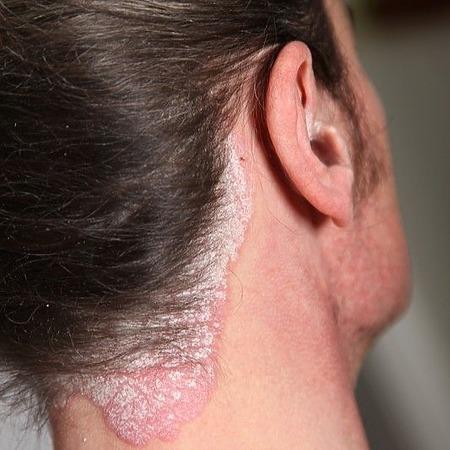
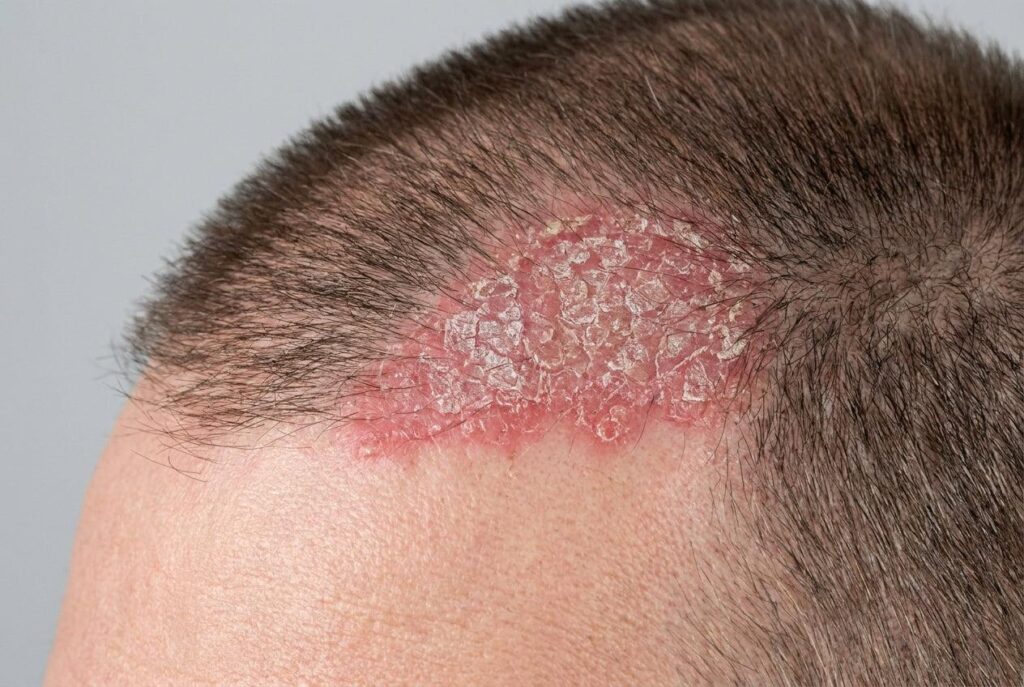
The difference is that psoriasis can cause thicker, raised and clearly defined patches on the scalp. The scale may have a silvery-white appearance and can stick more firmly to the skin than ordinary dandruff. So seeing flakes alone does not tell you what the condition is. You need to look at the whole picture.

Signs that may point toward scalp psoriasis
1. The flakes are thick and seem to stick to the scalp
Ordinary dandruff often appears as smaller, loose flakes. With scalp psoriasis, the scaling can be thicker and more noticeable. It may form over a patch of affected skin instead of simply appearing as loose flakes throughout the scalp. The scale may also have a silvery-white appearance.
2. You can feel a raised patch underneath the flakes
This is one clue that should not be ignored. Instead of feeling like simple dry skin, psoriasis may create a thicker area of skin underneath the scale. The patch can feel rough, raised or inflamed. These patches may be small and hidden beneath the hair, or they can cover much of the scalp.
3. The problem reaches beyond the hairline
This can be another useful clue. Scalp psoriasis may extend to the forehead along the hairline, the back of the neck or the area behind the ears. Dandruff generally does not create the same clearly defined plaques extending onto nearby skin.
Still, appearance alone cannot confirm a diagnosis.
4. The itching is persistent or intense
An itchy scalp does not automatically mean psoriasis. Dandruff can itch too.
But scalp psoriasis can cause anything from mild itching to intense itching that interferes with everyday activities or sleep. If you are repeatedly scratching the same areas, pay attention to what happens next. Scratching can make psoriasis thicker and more irritated. It can also cause bleeding and temporary hair loss.
5. Your scalp feels sore or burns
Some people with scalp psoriasis describe more than itching. The scalp can feel sore, irritated or as though it is burning. This is not something you should simply dismiss as dandruff, especially if it keeps returning.
What about hair loss?
Scalp psoriasis does not usually mean permanent hair loss. However, severe scratching or forcefully removing thick scales can pull out hairs or damage the scalp enough to cause temporary hair loss. Hair often grows back after the scalp problem improves. This is why trying to scrape scales off with your nails is not a good idea. The gentler approach is safer for an irritated scalp.
Dandruff, dry scalp or psoriasis?
There are several reasons for a flaky scalp. Dandruff is common and may cause itching and flakes. A dry scalp can also become itchy and flaky, particularly when the skin loses too much moisture or is irritated by hair-care products or environmental conditions.
Psoriasis is different because it can produce thicker, raised and well-defined patches. There are also other scalp conditions that can resemble dandruff, including eczema, seborrhoeic dermatitis and fungal infections. That is why repeatedly changing shampoos without knowing the cause may not solve the problem.
What happens when you keep scratching?
Imagine having an itchy patch and scratching it without thinking. For a moment, it may feel better. But repeated scratching can irritate the scalp even more. In scalp psoriasis, scratching can worsen the patches, cause bleeding and contribute to temporary hair loss.
Picking or forcefully removing the scales can also make the condition worse. If your scalp is itchy, try to handle it gently rather than scraping away the flakes.
When should you get your scalp checked?
Consider getting professional advice if:
- the flakes keep returning despite regular dandruff care
- the scalp has thick or raised patches
- the affected area is very itchy
- the scalp becomes sore, painful or starts bleeding
- the scaling extends beyond the hairline
- you notice temporary hair loss around the affected area
- similar patches appear on your elbows, knees, ears or other parts of the body
- you are simply unsure what is causing the problem
Persistent or severe scalp symptoms may need proper assessment because several scalp conditions can look alike.
What can you do while you are figuring it out?
Be gentle with your scalp. Avoid aggressively scratching or scraping the scales. Use hair-care products carefully if your scalp feels irritated, and avoid hairstyles or treatments that pull or irritate the scalp during a flare.
Most importantly, do not assume that every flaky scalp is dandruff. The right treatment depends on the actual cause.
So, is it dandruff or scalp psoriasis?
The flakes alone cannot give you the answer. Dandruff usually produces loose flakes and itches. Scalp psoriasis can also flake, but it may cause thicker, raised and clearly defined patches, silvery-white scale, intense itching, soreness, or patches that extend beyond the hairline.
If your scalp problem keeps coming back or is becoming more difficult to control, it is worth getting it assessed rather than continuing to treat it as ordinary dandruff.
Conclusion
A flaky scalp is easy to ignore. After all, dandruff is common. But when the flakes are thick, the scalp feels raised or sore, the itching becomes intense, or the patches reach the hairline and behind the ears, there may be something more going on.
Scalp psoriasis can look like dandruff in the beginning. Understanding the warning signs can help you recognise when it is time to stop guessing and seek proper guidance.
Not sure whether your scalp problem is dandruff or psoriasis? If you have persistent flakes, itching, thick patches or irritation that keeps returning, it may be time to get your scalp properly assessed. Talk to the Psoriatreat team about your scalp concerns and get appropriate guidance for your condition. – Consult a Specialist
Frequently Asked Questions
1. How can I tell if my dandruff is actually scalp psoriasis?
Scalp psoriasis may cause thicker, raised and clearly defined patches with silvery-white scales. It can also extend beyond the hairline or cause significant itching, soreness or temporary hair loss. However, these signs cannot confirm the diagnosis on their own.
2. Can scalp psoriasis look exactly like dandruff?
Yes. Mild scalp psoriasis can look very similar to dandruff because both can cause flakes and itching. The thickness, shape and location of the affected areas can provide useful clues.
3. Does scalp psoriasis cause hair loss?
It can cause temporary hair loss, particularly when a person scratches heavily or forcefully removes scales. Hair commonly grows back after the scalp condition improves.
4. Should I scratch or remove the scales from my scalp?
It is better not to scratch, pick or scrape the scales aggressively. This can irritate the scalp, worsen psoriasis and contribute to bleeding or temporary hair loss.
5. When should I see a doctor for a flaky scalp?
Consider professional evaluation when the problem is persistent, severe, very itchy, painful, bleeding, associated with hair loss, or not improving with ordinary dandruff care. Other scalp conditions can look similar, so identifying the cause matters.
Written by –
This article is written by Dr. R. S. Sonawane.
M.D. (Homeopathy), DI (Homeopathy), London
Psoriasis Specialist Doctor in India
Dr. R. S. Sonawane is India’s first Homeopathic Psoriasis Specialist, with over 40 years of dedicated experience in treating psoriasis and related chronic skin conditions using a holistic, patient-focused approach. He holds advanced training in homeopathy and has helped tens of thousands of patients achieve long-term relief from psoriasis through personalized, immune-balancing treatment plans designed to address the root cause of the condition rather than just symptoms.
For more such tips and information from Dr. R. S. Sonawane, follow him on –
https://www.instagram.com/psoriatreat
https://www.linkedin.com/in/psoriatreat
Calculate your Psoriasis Severity Score – Psoriasis Severity Calculator
[Disclaimer – The images used in this article are for educational and reference purposes only. They are not original patient photographs from Psoriatreat and should not be used for self-diagnosis. Skin conditions can look different from person to person, and a healthcare professional should assess persistent or unusual skin changes.]