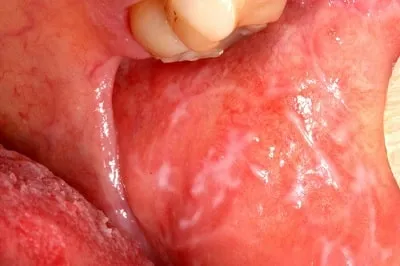
let us understand lichen planus first. It is an inflammatory condition of the skin and mucous membrane. On the skin, lichen planus appears as purplish, itchy, flat topped bumps. On mucous membranes, such as in the mouth, it forms lacy, white patches, sometimes with painful sores. Less commonly, the lesions can occur in other areas like:


For Lichen Planus Oral, good oral hygiene is important. You can help reduce the pain of mouth sores by avoiding:

On the vulva, white streaks develop, similar to those that appear in the mouth. They are usually neither itchy nor painful. The skin may be red. Scar tissue may distort the shape of the vagina. Lichen planus can affect deeper areas within the vagina, causing desquamative vaginitis. Discharge can occur when the surface cells in the vagina peel off. The eroded vagina may easily bleed when touched. Sexual intercourse may become painful, difficult, or impossible.
This affects areas in which hair grows, such as the scalp. There may be redness and irritation. This type of lichen planus sometimes causes hair loss, which can be permanent. In extremely rare cases, lichen planus can occur in the anus, ear canal, eyelids and esophagus.
Lichen planus can occur in anyone at any age, but there are certain factors that make some people more likely to develop the condition. The skin form of lichen planus occurs in men and women equally, but women are twice as likely to get the oral form. It’s very rare in children and older adults. It’s most common in middle-aged people.
Some causes of lichen planus are thought to involve the following:
Lichen planus can occur as a reaction to certain medicines, including:


Lichen planus is an inflammatory condition that affects the skin and mucous membranes. It usually appears as purplish, itchy, flat-topped bumps on the skin or as white lacy patches inside the mouth. The condition can affect different parts of the body including the wrists, ankles, scalp, nails, and oral cavity.
Common symptoms include itchy purple or reddish skin lesions, flat-topped bumps, white lines on the rash known as Wickham’s striae, and sometimes painful sores in the mouth. The rash often appears on the wrists, ankles, lower back, or inside the mouth.
The exact cause of lichen planus is not completely understood, but it is believed to be related to an immune system reaction. Certain medications, infections, stress, or genetic factors may trigger the condition in some individuals.
No, lichen planus is not contagious. It cannot spread from one person to another through contact, sharing personal items, or physical interaction.
Yes, oral lichen planus is a common form of the disease. It appears as white lacy patches inside the cheeks or on the gums and tongue. In some cases, painful ulcers or burning sensations may occur, especially when eating spicy or acidic foods.
Lichen planus can affect several parts of the body including the skin, mouth, scalp, nails, and genital areas. In some cases, it may also affect hair follicles, leading to hair loss.
Yes, a type called lichen planus follicularis can affect the scalp and damage hair follicles. In severe cases, it may lead to permanent hair loss if not treated early.
Flare-ups may be triggered by stress, certain medications, infections, or immune system disturbances. Lifestyle factors such as smoking or consuming spicy foods may worsen oral lichen planus symptoms.
Doctors usually diagnose lichen planus through clinical examination of the skin or mouth. In some cases, a small skin biopsy may be performed to confirm the diagnosis.
Homeopathic treatment focuses on improving the immune system and addressing the underlying causes of chronic skin conditions. Individualized homeopathic medicines may help manage symptoms and reduce recurrence in patients with lichen planus.