Introduction:
Psoriasis vs Dry Skin: How Are They Different? – It starts with something that seems harmless. Your skin feels dry. Maybe it is a little itchy too. You notice some white flakes on your arm, leg or scalp, so you apply a moisturiser and expect the problem to settle. Sometimes it does.
But sometimes the same patch keeps coming back. It becomes thicker, more noticeable and more difficult to ignore. You may begin to wonder whether you are dealing with ordinary dry skin or something else. This is where psoriasis can be confusing.
Psoriasis can make the skin dry and flaky, so it can look like simple dryness at first. But psoriasis is more than a lack of moisture in the skin. It is a long-term inflammatory skin condition that can cause clearly defined, raised and scaly patches. Ordinary dry skin, on the other hand, usually happens when the skin loses too much moisture and often improves when the skin is protected and moisturised. So, how can you tell the difference?
Dry skin and psoriasis can look similar
The confusion is understandable. Both can cause itching. Both can make the skin look flaky. Both can leave the skin feeling rough and uncomfortable. In colder or drier weather, both may become more noticeable.
There is also an important connection between the two. Psoriasis itself can make the skin dry, and people with psoriasis often need regular moisturising to reduce dryness and irritation. That means simply looking at flakes is not enough to decide whether you have dry skin or psoriasis. The pattern matters.

What does ordinary dry skin usually look like?
Dry skin often feels rough, tight or uncomfortable. You may notice fine flakes across an area rather than one clearly outlined patch. If the dryness becomes severe, the skin can crack, sting or even bleed. The cause may be quite ordinary. Long, hot showers, harsh soaps, frequent washing, cold weather, dry air and some skin-care products can remove moisture from the skin and make dryness worse.
For many people, simple changes can make a noticeable difference. Using a gentle cleanser, avoiding very hot water and applying a suitable moisturiser regularly can help the skin hold on to moisture.
If the dryness improves and stays away with these changes, that may point more towards ordinary dry skin. But there are times when dryness keeps returning despite good skin care. That is when it is worth looking more closely at what is happening.
What does psoriasis usually look like?
Psoriasis often produces patches that are thicker and more clearly defined than ordinary dry skin. In the most common form, called plaque psoriasis, the skin becomes raised and develops a layer of scale. These patches commonly occur on the elbows, knees, scalp and lower back, although psoriasis can appear almost anywhere on the body.
The colour can also vary depending on the person’s natural skin tone. On lighter skin, psoriasis may look pink or red. On brown or black skin, it may look darker, greyish or violet, so it is not always easy to recognise from photographs found online.
The patches may itch, crack or become sore. Some people have only a few areas, while others develop several patches across different parts of the body. One clue is persistence. A patch that repeatedly returns in the same places deserves more attention than skin that simply becomes dry after a cold spell or a long hot shower.
The shape and border can give you a clue
Imagine two people with itchy, flaky skin. The first person has general dryness across both hands. The skin feels tight and rough, particularly after washing. After applying a suitable moisturiser regularly, it gradually feels better.
The second person has a clearly outlined, thicker patch on the elbow. The surface is scaly and the same patch has appeared repeatedly. The two may both describe their problem as “dry skin,” but the pattern is quite different.
Psoriasis commonly produces well-defined patches, while ordinary dryness tends to be more diffuse. This difference is useful, although it is not enough to diagnose psoriasis by yourself.
Where the skin problem appears can also matter Location is another useful clue. Psoriasis commonly affects the elbows, knees, scalp and lower back. It can also affect the nails and other areas of the body. Some forms appear in skin folds and may look smooth rather than heavily scaly.
Dry skin can appear almost anywhere, particularly in areas that are exposed to cold weather, frequent washing or irritating products. Hands, legs and feet are common places for noticeable dryness.
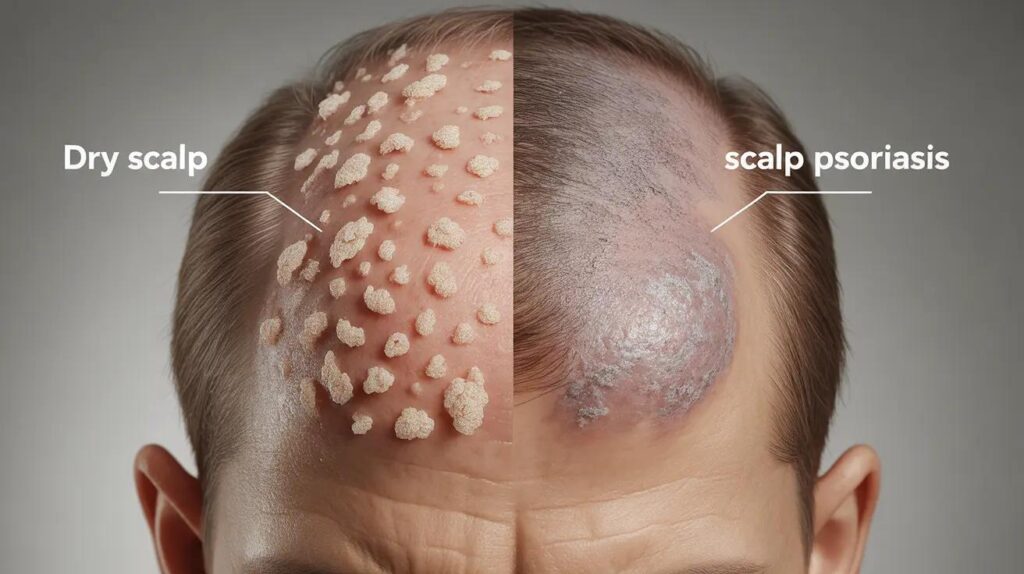
The scalp can be especially confusing. A dry scalp may produce small flakes. Scalp psoriasis can also cause flaking, but the scales may be thicker and have a silvery appearance. Psoriasis can also extend beyond the hairline or appear behind the ears.
Does itching mean it is psoriasis?
Not necessarily. Itching is common with both dry skin and psoriasis. Very dry skin can itch because the skin has lost moisture and its protective outer layer has become irritated. Psoriasis can also itch, and for some people the itching can be intense.
So the question should not simply be, “Does it itch?” Instead, look at the whole picture. Is the skin raised? Is there a clearly defined border? Is the scale thick? Does the same patch keep returning? Is it appearing on the elbows, knees or scalp? Are there changes in the nails? These clues are more useful when considered together.
Can moisturiser help if you have psoriasis?
Yes. Moisturising is useful for psoriasis because psoriasis can leave the skin dry and scaly. A suitable moisturiser can help reduce dryness and support the skin barrier.
But there is an important difference between making the skin more comfortable and treating the underlying condition.
If a thick, raised, scaly patch continues to return despite regular moisturising, simply applying more moisturiser may not address the underlying problem. That is one reason persistent or recurring patches should be assessed rather than being labelled as “just dry skin.”
What happens if you keep scratching?
Scratching can make either problem more uncomfortable. With very dry skin, repeated scratching can damage the outer layer and create cracks. With psoriasis, scratching can also worsen the affected patches and may make them thicker.
If you find yourself scratching the same patch repeatedly, try to identify why it keeps itching instead of simply scratching harder. Keeping the skin moisturised can help with dryness, but if the itching comes from an underlying skin condition, that condition may need appropriate treatment.
When should you stop assuming it is just dry skin?
A patch deserves medical attention when it keeps returning, becomes thick or raised, develops obvious scale, spreads, bleeds, becomes painful or does not improve with sensible skin care.
The same applies when the diagnosis is simply unclear. There are several conditions that can look similar to psoriasis or dry skin, including eczema and other inflammatory skin conditions. Even trained clinicians sometimes need to examine the skin carefully to tell them apart. Trying several creams at home can sometimes make the picture more confusing, especially when a product irritates the skin.
What can you do at home while you are figuring it out?
Start with gentle skin care. Avoid very hot showers and harsh soaps. Use a gentle cleanser and apply a fragrance-free moisturiser after bathing while the skin is still slightly damp. These steps can help reduce ordinary dryness and may also make psoriasis-affected skin more comfortable.
But do not use improvement with moisturiser as proof that you have ordinary dry skin. Psoriasis can also feel better when the skin is moisturised. If a particular patch keeps returning, becomes thick or scaly, or has other features that concern you, it is better to have it assessed.
So, which one is it?
There is no single sign that can always separate psoriasis from dry skin. Dry skin is usually linked to moisture loss and often causes roughness, tightness, fine flaking and sometimes cracks. Psoriasis more often causes persistent, clearly defined, raised or thickened patches with noticeable scale.
But there can be overlap. A person can have psoriasis and dry skin at the same time. In fact, psoriasis itself can contribute to dryness. That is why the safest approach is to look at the complete pattern rather than relying on one symptom.
Conclusion
If your skin is dry and flaky, it does not automatically mean you have psoriasis. And if you have psoriasis, the dryness does not mean that the condition is simply ordinary dry skin. The difference often comes down to the pattern: how clearly the area is outlined, whether the skin is raised or thick, how much scale is present, where the patches appear, whether they keep coming back and whether other symptoms are present.
If ordinary dryness improves with gentle skin care and regular moisturising, that is reassuring. But if a particular patch keeps returning or becomes thick, raised, scaly or painful, it is worth having it assessed rather than continuing to treat it as simple dryness. When it comes to skin problems, knowing what you are dealing with is the first step toward choosing the right care.
If a dry, itchy or scaly patch keeps coming back, becomes thicker, or does not improve with regular skin care, it may be worth getting it assessed.
Talk to the Psoriatreat team about your skin concerns and get appropriate guidance for your condition. Consult a Specialist – Book an Appointment
FAQ’s
1. How can I tell if I have psoriasis or dry skin?
Dry skin usually causes roughness, tightness, fine flakes and sometimes cracks. Psoriasis more often causes clearly defined, raised or thickened patches with noticeable scaling. However, the two can overlap, so a persistent patch may need professional assessment.
2. Can dry skin turn into psoriasis?
Ordinary dry skin does not simply turn into psoriasis. Psoriasis is a separate inflammatory skin condition. However, psoriasis itself can make the skin dry and flaky, which is one reason the two can be confused.
3. Does psoriasis always have thick, white scales?
No. The appearance varies with the type of psoriasis and the person’s skin tone. Some forms may have little visible scaling, while psoriasis in skin folds can appear relatively smooth.
4. Can moisturiser help psoriasis?
Yes. Moisturising can reduce dryness and help make psoriasis-affected skin more comfortable. However, moisturiser alone does not necessarily treat the underlying psoriasis.
5. When should I see a doctor for dry, itchy skin?
Consider getting the skin checked if a patch keeps returning, becomes thick or raised, develops significant scaling, spreads, cracks or bleeds, or does not improve with sensible skin care.
Written by –
This article is written by Dr. R. S. Sonawane.
M.D. (Homeopathy), DI (Homeopathy), London
Psoriasis Specialist Doctor in India
Dr. R. S. Sonawane is India’s first Homeopathic Psoriasis Specialist, with over 40 years of dedicated experience in treating psoriasis and related chronic skin conditions using a holistic, patient-focused approach. He holds advanced training in homeopathy and has helped tens of thousands of patients achieve long-term relief from psoriasis through personalized, immune-balancing treatment plans designed to address the root cause of the condition rather than just symptoms.
For more such tips and information from Dr. R. S. Sonawane, follow him on –
https://www.instagram.com/psoriatreat
https://www.linkedin.com/in/psoriatreat
Calculate your Psoriasis Severity Score – Psoriasis Severity Calculator
[Disclaimer – The images used in this article are for educational and reference purposes only. They are not original patient photographs from Psoriatreat and should not be used for self-diagnosis. Skin conditions can look different from person to person, and a healthcare professional should assess persistent or unusual skin changes.]