
Introduction:
Why does psoriasis affect elbows & knees more in winter? – If you have psoriasis, winter is probably not your favourite season. Along with cold weather, many people notice their symptoms becoming more noticeable, especially on the elbows and knees. Patches may become drier, thicker, itchier, and harder to manage during colder months. This isn’t a coincidence. Seasonal changes, reduced sunlight, and winter habits all play a role in triggering flare-ups. Understanding why psoriasis behaves this way in winter can help you take better care of your skin and reduce discomfort.
If you have psoriasis, winter is probably not your favorite season. When a person with psoriasis is already dealing with cold weather, that person may notice something else too, those stubborn patches on your elbows and knees start acting up even more. Lets see the reasons behind this:

Winter dries your skin and psoriatic skin does not like it:
The cold outside and heaters inside absorb all the moisture from skin. When skin is dehydrated it may loses its protective barrier. Elbows and knees already do not have as much natural oil on their skin, so their skin dries quickly compared with other parts of the body. When the skin dries and becomes cracked, it will be easy for the psoriasis to develop into a thick, itchy, scaly spot.
Less sunlight means less relief
The main fact is sunlight helps psoriasis in several ways. The UV rays from the sun slow down the overproduction of the skin cells. In winter, we cover up our skin and stay indoors, and see less of the sun. As a consequence, psoriasis lacks the beneficial effect it normally has partly because affected patches on elbows and knees are likely to appear first.
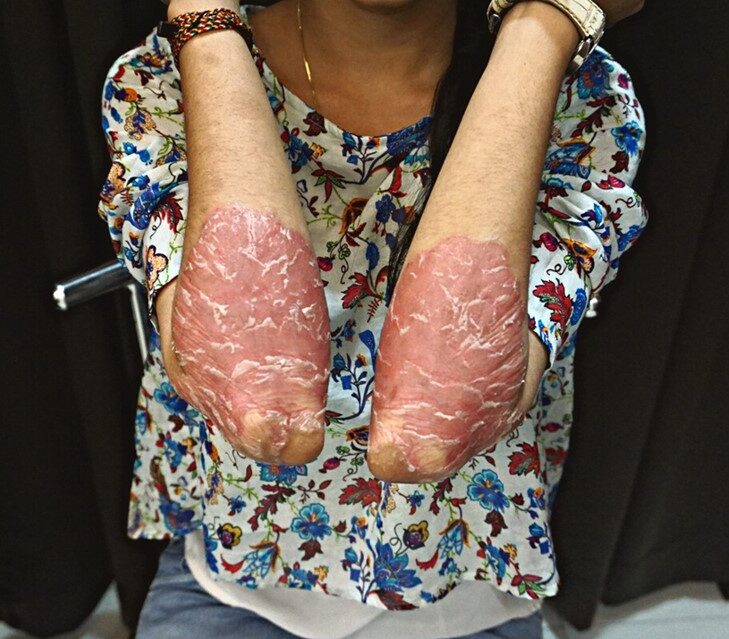
Thicker Skin = Thicker Plaques
The skin on elbows and knees is normally thicker than normal skin. The skin cells in a psoriatic patient grow at a faster rate and accumulate before the removal of older skin cells. As a result, arterial plaques in these regions tend to be more likely to be thick, rugged, and intractable with respect to healing, particularly in the winter months.
Winter Habits Don’t Help Either
1. Hot showers feel great but they dehydrate your skin.
2. Usually we drink less water in winter.
3. We move less
4. Stress level also affects

The immune system plays a role too
Psoriasis is also related to the immune system. During winter, the immune system may turn more sensitive because of infections, stress, and the unavailability of sunlight. The additional activity of the immune system may trigger more flare-ups in the skin areas with psoriasis.
What can psoriasis patients do to Protect their skin in Winter:
- Apply lotion daily, especially after bathing
- Do not take extremely hot showers.
- Wear gentle clothing that does not irritate
- Do not rub or scratch affected areas
Conclusion:
Winter can be challenging for people living with psoriasis, particularly when it comes to stubborn areas like the elbows and knees. Dry air, reduced sun exposure, thicker skin, lifestyle changes, and immune system sensitivity all work together to worsen symptoms. While winter flare-ups are common, they are manageable. With regular moisturizing, gentle skincare habits, and the right medical guidance, psoriasis patients can protect their skin and stay more comfortable throughout the colder months.
FAQ’s:
1. Why does psoriasis mainly affect elbows and knees?
Elbows and knees have thicker skin, less natural oil, and are exposed to constant friction and pressure. These factors make them more prone to psoriasis plaque formation and flare-ups.
2. Does cold weather cause psoriasis?
Cold weather does not cause psoriasis, but it can trigger or worsen flare-ups by drying out the skin, reducing sunlight exposure, and increasing stress on the immune system.
3. Can sunlight really help psoriasis?
Yes. Sunlight provides UV rays that slow down the rapid growth of skin cells. Limited sun exposure in winter can reduce this natural benefit, leading to worsening symptoms.
4. Are hot showers bad for psoriasis in winter?
Yes. Although hot showers feel comforting, they remove natural oils from the skin and increase dryness, which can worsen psoriasis symptoms.
5. How often should psoriasis patients moisturize in winter?
Moisturizing at least twice daily, especially after bathing, is recommended to lock in moisture and strengthen the skin barrier.
6. Can stress make psoriasis worse during winter?
Absolutely. Stress is a known trigger for psoriasis flare-ups, and stress levels often rise during winter due to lifestyle changes and seasonal factors.
7. Should I continue my psoriasis treatment during winter?
Yes. Consistency is important. Always continue prescribed treatments and consult your dermatologist if symptoms worsen during winter.
Written by –
This article is written by Dr. R. S. Sonawane.
M.D. (Homeopathy), DI (Homeopathy), London
Psoriasis Specialist Doctor in India
Dr. R. S. Sonawane is India’s first Homeopathic Psoriasis Specialist, with over 40 years of dedicated experience in treating psoriasis and related chronic skin conditions using a holistic, patient-focused approach. He holds advanced training in homeopathy and has helped tens of thousands of patients achieve long-term relief from psoriasis through personalized, immune-balancing treatment plans designed to address the root cause of the condition rather than just symptoms.
For more such tips and information from Dr. R. S. Sonawane, follow him on –