Introduction:
Understanding Psoriasis Treatment: What Patients Should Know? – When psoriasis appears on your skin, the first question is often simple: “How can I make it better?”
For some people, the problem starts with a small patch on the elbow or knee. For others, it affects the scalp, hands, feet, nails, or larger areas of the body. The itching, scaling, and visible changes can make everyday life uncomfortable. Some people also feel worried about how others may react to their skin.
Finding the right treatment can take time. You may hear about creams, tablets, light therapy, injections, home remedies, and different healing approaches. With so much information available, it can be difficult to know which option is suitable for you.
The important thing to understand is that psoriasis treatment is not the same for everyone. The right approach depends on the type of psoriasis, the areas affected, the severity of symptoms, your general health, and how the condition affects your daily life.
This guide explains the main treatment options, what to expect, and what to discuss with your healthcare professional.
What is the goal of psoriasis treatment?
Psoriasis is a long-term inflammatory condition linked to the immune system. It causes skin cells to build up too quickly, leading to thick, scaly patches. Symptoms may improve for a period and then return.
Although there is currently no established permanent cure for psoriasis, several treatments can help control symptoms and improve skin health.
Treatment may aim to:
- Reduce itching, redness, scaling, and discomfort.
- Help existing patches become thinner or clearer.
- Reduce the frequency or severity of flare-ups.
- Improve sleep, confidence, and daily comfort.
- Treat nail symptoms and identify possible joint problems.
- Help prevent the condition from becoming more difficult to manage.
For some people, the skin may become almost clear. Others may need ongoing treatment to keep symptoms under control. Improvement can look different from one person to another.

What determines which treatment is right for you?
Before recommending treatment, a healthcare professional considers several things.
1. The type of psoriasis
Plaque psoriasis commonly causes raised, scaly patches. Other types may affect the scalp, skin folds, palms, soles, or nails. Some forms cause many small spots or widespread redness. The treatment that works well for one type may not be suitable for another.
2. The areas affected
A small patch on the elbow may need a different approach from psoriasis affecting the face, scalp, hands, feet, or genital area. Sensitive areas often require special care because some medicines can irritate the skin or cause side effects if used incorrectly.
3. How severe the symptoms are
Your healthcare professional may consider how much skin is affected, how thick the patches are, and whether itching or pain interferes with sleep, work, or daily activities. Even a small patch can have a major effect if it affects a sensitive or visible area.
4. Your general health
Other medical conditions, current medicines, past treatments, pregnancy plans, and the possibility of joint involvement can all influence treatment choices. Tell your healthcare professional about your full medical history and every medicine or supplement you take.
What are the main treatment options for psoriasis?
There is no single treatment that works best for every person. Depending on your needs, a clinician may recommend one treatment or a combination of options.
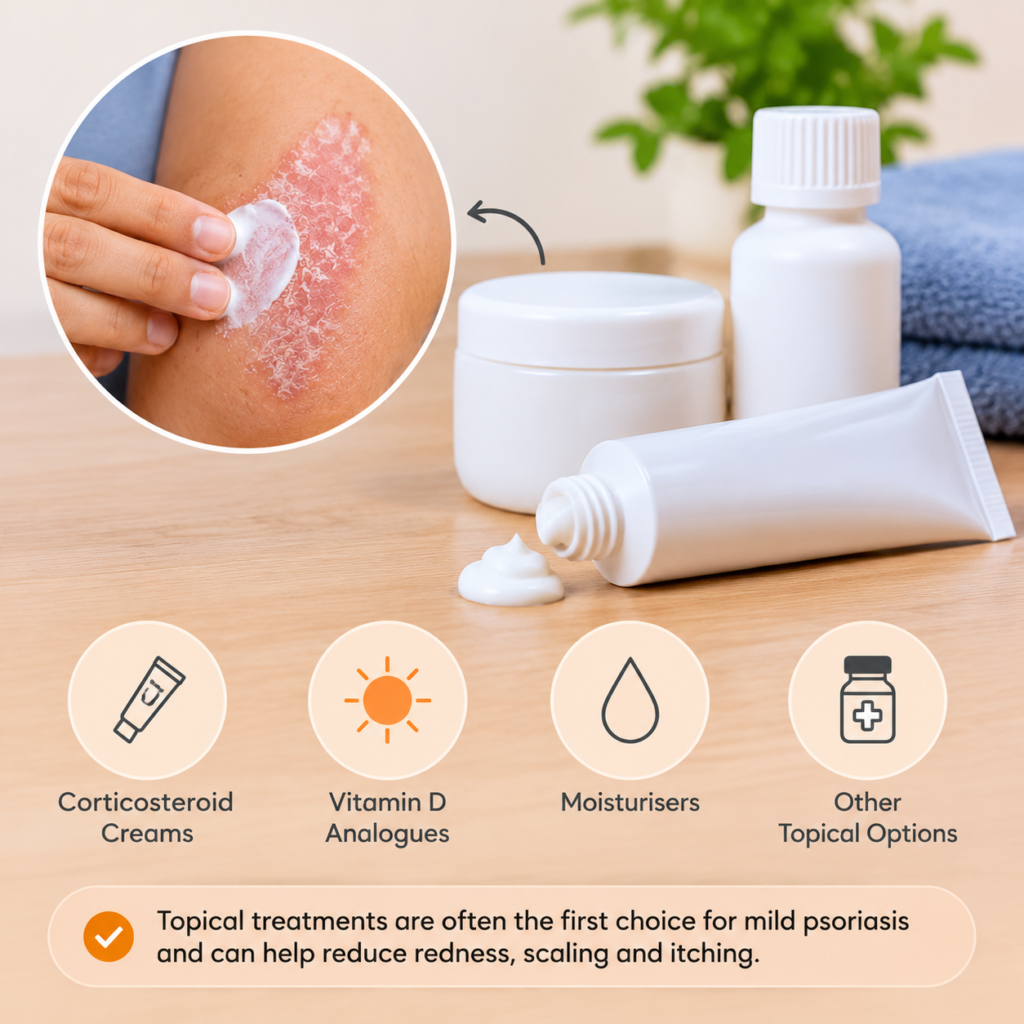
1. Creams, ointments, and other skin treatments
Treatments applied directly to the skin are often used for mild psoriasis and may also be combined with other treatments. Depending on the condition, options may include:
- Moisturisers: Help reduce dryness, soften the skin, and support the skin barrier.
- Topical corticosteroids: Reduce inflammation and are commonly prescribed for certain areas and periods.
- Vitamin D-based medicines: Can help slow the excess growth of skin cells.
- Other prescription creams or ointments: May be used for specific body areas or when other treatments are unsuitable.
- Scale-softening products: May help loosen thick scales when used appropriately.
The right product, strength, amount, and duration matter. A medicine suitable for the elbows may not be appropriate for the face or skin folds.
Do not use strong steroid creams for long periods or apply them to sensitive areas without medical guidance. Follow the instructions provided with your treatment.
2. Phototherapy or medical light treatment
Phototherapy uses controlled types of light to help reduce psoriasis inflammation and slow the rapid growth of skin cells.
A healthcare professional may recommend it when psoriasis affects larger areas or does not respond well enough to skin treatments alone.
Phototherapy usually requires repeated sessions over several weeks. The schedule depends on the type of treatment and your response.
It is not the same as using a tanning bed or deliberately sitting in strong sunlight. Unsupervised ultraviolet exposure can burn the skin, worsen symptoms, and increase the risk of skin damage.
Ask your clinician whether phototherapy is suitable for you and what side effects or precautions apply.
3. Tablets and other medicines that work throughout the body
When psoriasis is more extensive, causes major discomfort, or affects areas that are difficult to treat, a clinician may consider medicines that work throughout the body. These are often called systemic treatments.
Depending on the person, options may include medicines such as methotrexate, ciclosporin, acitretin, apremilast, or other targeted treatments.
These medicines work in different ways. Some affect immune activity, while others target specific processes involved in inflammation and skin-cell growth.
They can be helpful, but they may also have important risks. Some require blood tests or other monitoring. Your medical history and other medicines must be considered before treatment begins.
Never start, stop, or change the dose of a prescription medicine on your own.
4. Biologic treatments
Biologic medicines target particular parts of the immune system involved in psoriasis. They are usually given by injection, and some are administered at a healthcare facility.
They may be considered for people with moderate to severe psoriasis or when other treatments have not provided enough relief.
The choice depends on the type of psoriasis, other health conditions, previous treatment response, and individual risks. Screening and monitoring may be needed because these medicines can affect the body’s response to certain infections.
Biologic treatment is not necessary for everyone, but it can be an important option for suitable patients.
5. Lifestyle measures and everyday skin care
Daily habits cannot replace medical treatment when treatment is needed, but they can support overall skin care. Helpful measures may include:
- Applying a suitable moisturiser regularly.
- Taking lukewarm rather than very hot showers.
- Avoiding harsh scrubbing and picking at scales.
- Noticing whether stress, poor sleep, or particular activities are linked to flare-ups.
- Avoiding smoking and limiting alcohol.
- Following a balanced eating pattern and staying physically active where possible.
- Protecting the skin from cuts, friction, and sunburn.
There is no single diet that treats psoriasis in everyone. Be cautious about strict diets, unproven supplements, and products advertised as guaranteed cures.
What about Homeopathy and other alternative treatments?
People often explore different approaches when psoriasis keeps returning or when they are concerned about long-term medicines. It is understandable to want a treatment that feels manageable and suits your needs.
However, it is important to distinguish personal experiences and treatment claims from strong scientific evidence.
Homeopathy has not been shown by reliable, high-quality evidence to cure psoriasis or reliably control it. It should not replace evidence-based psoriasis treatment. If you are considering homeopathy or another complementary approach, discuss it openly with your healthcare professional and do not stop prescribed treatment without advice.
Be especially careful with claims such as “permanent cure,” “no side effects,” or “guaranteed results.” A treatment can have risks even if it is described as natural. Some products may contain active ingredients or interact with medicines.
You deserve clear information about what is known, what remains uncertain, and what risks may apply to you.

How long does psoriasis treatment take to work?
There is no single timeline for every treatment. Some treatments may begin to reduce symptoms within a few weeks, while others need longer or repeated sessions before improvement becomes clear. The result also depends on the severity of psoriasis, the treatment used, and whether it is followed as directed.
During treatment, keep track of changes such as:
- Whether itching or soreness has reduced.
- Whether patches are becoming thinner or smaller.
- Whether new patches are appearing.
- Whether your sleep or daily comfort has improved.
- Whether you are experiencing side effects.
Do not assume that a treatment has failed after only a few days unless you have been told to expect a quick response or you develop a concerning reaction. Ask your clinician when you should expect improvement and when the plan should be reviewed.
Why does psoriasis sometimes return?
Psoriasis is a long-term condition, so symptoms can return even after the skin improves. This does not automatically mean you did something wrong or that every treatment has failed.
Flare-ups may be associated with stress, infections, skin injuries, weather changes, smoking, alcohol, or certain medicines. Sometimes, no clear trigger can be identified.
Keeping a simple diary of symptoms, medicines, recent illnesses, sleep, and possible triggers can help you notice patterns. Share this information at follow-up visits.
If your psoriasis returns, your treatment plan may need to be reviewed. Do not restart old prescription medicines or change doses without professional advice.
Questions to ask before starting treatment
A treatment discussion should help you understand your options, not leave you feeling confused. Consider asking:
- What type of psoriasis do I have?
- Why are you recommending this treatment for me?
- How should I use it, and how long might it take to work?
- What side effects should I watch for?
- Will I need blood tests or other monitoring?
- What should I do if my symptoms worsen or return?
- Are there any interactions with my current medicines?
- What are the likely costs and practical requirements?
- Could my joint pain or nail changes be related to psoriasis?
- When should I arrange a follow-up appointment?
Write down your questions before the consultation. Bring your current medicine list, previous prescriptions, reports, and photographs of flare-ups if the skin changes from day to day.

Upcoming Webinar: World Psoriasis Day 2026
On the occasion of World Psoriasis Day, Psoriatreat Psoriasis Research and Homeopathic Clinics Pvt. Ltd. is organizing a special webinar titled “Understanding Psoriasis, Understanding You.”
Date: 29 October 2026
Time: 4:00 PM IST
Join us to learn more about psoriasis and raise awareness about this skin condition. For more information, visit this website.
When should you seek medical advice promptly?
Arrange a medical review if your psoriasis is worsening, affecting sleep or daily activities, or not improving with your current treatment. Also mention persistent joint pain, joint swelling, or morning stiffness, as these may be signs of psoriatic arthritis.
Seek urgent medical care if you develop widespread redness over much of your body, numerous pus-filled bumps, fever, or feel seriously unwell. These symptoms can indicate a serious problem and should not be managed with home remedies alone.
Conclusion
Understanding psoriasis treatment begins with knowing that there is no one-size-fits-all answer. Creams, medical light treatment, tablets, injections, and supportive skin-care habits each have a role for suitable patients.
The best next step is to understand your type of psoriasis, discuss the benefits and risks of available treatments, and review your progress with a qualified healthcare professional. Be patient with the process, but do not ignore symptoms that are worsening or affecting your quality of life.
Most importantly, do not feel that you have to navigate every treatment claim on your own. Reliable information and an open conversation with your healthcare professional can help you make a more informed decision.
If you have questions about your psoriasis symptoms or treatment options, prepare your medical history, current medicines, and any questions you want answered before your consultation. – Book a Consultation
You can contact Psoriatreat to ask about its consultation services and discuss your concerns with the clinic. Visit the Psoriatreat contact page to learn how to get in touch.
Frequently Asked Questions
1. Can psoriasis be cured permanently?
There is currently no established permanent cure for psoriasis. However, appropriate treatment can control symptoms, improve the skin, and help many people manage the condition over time.
2. Which treatment is best for psoriasis?
There is no single best treatment for everyone. The choice depends on the type and severity of psoriasis, the affected areas, your health, and your response to previous treatments.
3. Are creams enough to treat psoriasis?
Creams or ointments may be enough for some people with mild psoriasis. Others may need phototherapy, tablets, injections, or a combination of treatments. A healthcare professional can help determine what is appropriate.
4. Is homeopathy proven to cure psoriasis?
Reliable, high-quality evidence has not established homeopathy as a cure for psoriasis. Do not use it as a replacement for evidence-based treatment, and discuss any complementary products with your healthcare professional.
5. Why does psoriasis come back after treatment?
Psoriasis is a long-term condition that can flare up and settle down over time. Symptoms may return because of triggers, changes in the condition, or the need to review the treatment plan. Follow up with your healthcare professional rather than changing medicines on your own.
Written by –
This article is written by Dr. R. S. Sonawane.
M.D. (Homeopathy), DI (Homeopathy), London
Psoriasis Specialist Doctor in India
Dr. R. S. Sonawane is India’s first Homeopathic Psoriasis Specialist, with over 40 years of dedicated experience in treating psoriasis and related chronic skin conditions using a holistic, patient-focused approach. He holds advanced training in homeopathy and has helped tens of thousands of patients achieve long-term relief from psoriasis through personalized, immune-balancing treatment plans designed to address the root cause of the condition rather than just symptoms.
For more such tips and information from Dr. R. S. Sonawane, follow him on –
https://www.instagram.com/psoriatreat_india/
https://www.linkedin.com/in/psoriatreat
Calculate your Psoriasis Severity Score – Psoriasis Severity Calculator
[Disclaimer – The images used in this article are for educational and reference purposes only. They are not original patient photographs from Psoriatreat and should not be used for self-diagnosis. Skin conditions can look different from person to person, and a healthcare professional should assess persistent or unusual skin changes.]