
Introduction
How psoriasis patients should take care in summer – Summers are all about holidays, travels and fun !!
Everyone wants to go out for a walk, wear different fashionable clothes, take their selfies and post on social media, but psoriasis makes all the fun shine, I think, ‘What can we do for psoriasis ??? How many days do you want to hide it ??? When will this disease go away from my life ??? Will, I will ever be able to dress as I want, ??? Will my life be as smooth as anyone else’s ??? ‘
Definitely !!! The lives of so many psoriasis patients undergoing psoriasis have changed so much positively !!!
Psoriasis is a disease that is less common in the summer, warmer weather naturally reduces the roughness of the skin and reduces the symptoms of psoriasis, this is the time when you can start your homoeopathic treatment.
Now you ask why?
Homoeopathic remedies can make the disease worse at first and then subside.
Psoriasis, which is less common in summer, increases slightly but does not cause much discomfort. If homoeopathic treatment is started in summer, your winter will be bearable as it will have a good effect in the coming cold.
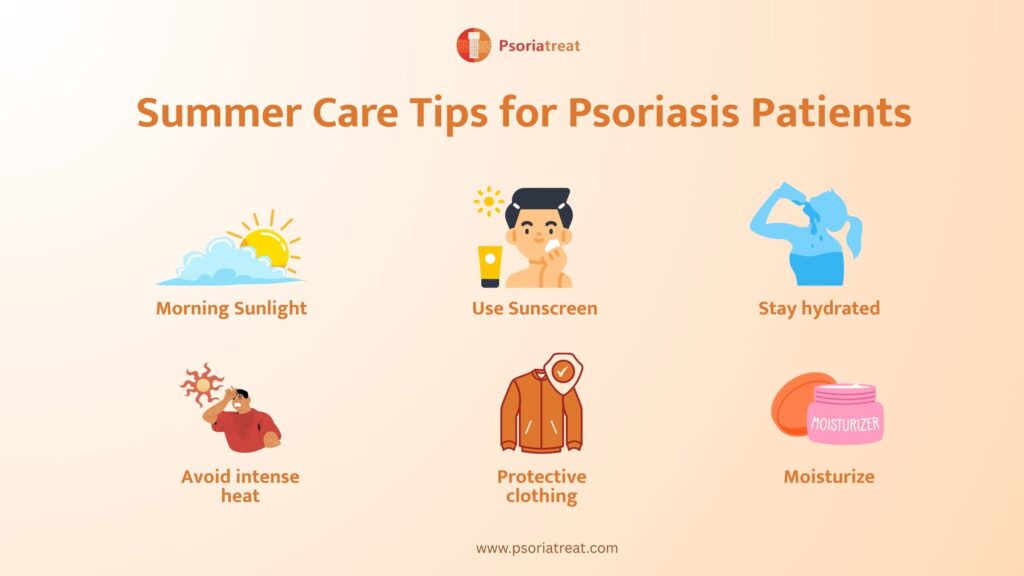
While psoriasis is a disease that naturally subsides in the summer, the skin of psoriasis will not go unnoticed in the summer, as morning wool helps cure psoriasis. But it only takes 10 minutes. Psoriasis patients should avoid intense heat from 11 to 5 pm.
Psoriasis can cause more damage to the skin due to intense summer sun rays, UV rays can cause sunburn on the skin of psoriasis, it can cause psoriasis to grow and inflame the whole body skin, rarely it becomes erythrodermic type. May have to do.
Psoriasis can be prevented with proper care in the summer. Sunscreen with SPF 30 and above should be used by psoriasis patients in the summer. Suncoat must also be used. Apply moisturizing lotion all over the body within 3 minutes after bathing.
Using a water-based moisturizer and sunscreen is more beneficial for the skin in summer than a very oily moisturizer and oily sunscreen. Patients should avoid foul-smelling sunscreens and moisturizers.
Drinking water should be increased as there is a lot of sweat in summer.
Psoriasis patients should drink 3 to 4 litres of water daily. Watermelon, melon, mango are abundant fruits in summer, all these fruits are eaten by patients suffering from psoriasis. Regular mealtimes should be observed regularly. Alcohol, smoking should be avoided completely.
Eat plenty of green leafy vegetables, fruits, whole grains, pulses of all kinds. Include linseed, olive oil, walnuts, almonds, cashews in your daily diet.
FAQ’s
1. Does psoriasis get worse in April or early summer?
For some people, psoriasis symptoms can feel worse in April or early summer due to heat, sweating, sun exposure, dry air, and friction from outdoor activities. Seasonal changes can affect the skin barrier and may trigger irritation or flare-ups if the skin is not properly cared for.
2. Is sunlight good for psoriasis?
A small amount of sunlight may help some people with psoriasis, but too much sun exposure can cause dryness, irritation, sunburn, and flare-ups. It is important to avoid excessive exposure and protect sensitive skin when spending time outdoors.
3. Why does sweat irritate psoriasis?
Sweat can increase itching, friction, and discomfort, especially in areas like the scalp, underarms, neck, elbows, knees, and skin folds. If sweat stays on the skin for too long, it may worsen irritation and make psoriasis-prone areas feel more inflamed.
4. How can I protect my scalp psoriasis in hot weather?
To manage scalp psoriasis during warmer days:
- Use a gentle or doctor-recommended shampoo
- Avoid hot water while washing
- Wear a lightweight cap, scarf, or hat outdoors
- Avoid scratching the scalp even if it feels itchy from sweat
Keeping the scalp clean and protected can help reduce discomfort.
5. What is the best skincare routine for facial psoriasis in summer?
A simple and gentle routine is usually best. You can:
- Wash your face with a mild, fragrance-free cleanser
- Apply a light moisturizer for sensitive skin
- Avoid harsh scrubs or strong products
- Use broad-spectrum sunscreen before sun exposure
The facial skin is delicate and needs extra care during hot weather.
6. Which areas of the body need extra care for psoriasis in summer?
During April and early summer, psoriasis may need extra attention on:
- Scalp
- Face
- Neck and arms
- Elbows and knees
- Underarms and skin folds
- Hands and feet
These areas are more likely to be affected by sweat, dryness, friction, and sun exposure.
7. What type of clothes are best for psoriasis in hot weather?
People with psoriasis often feel more comfortable in:
- Soft cotton or linen fabrics
- Loose-fitting clothes
- Light-colored outfits
These clothing choices help reduce heat build-up, sweating, and friction on the skin.
8. Can dehydration affect psoriasis symptoms?
Yes, dehydration may make the skin feel drier, tighter, and more uncomfortable, which can worsen psoriasis-related irritation. Drinking enough water and eating water-rich foods may help support better skin comfort during warmer weather.
9. Are cool showers helpful for psoriasis in summer?
Yes, a cool or lukewarm shower can help calm the skin after heat exposure. It can remove sweat, dust, and irritation from the body. After showering:
- Gently pat the skin dry
- Avoid harsh soaps
- Apply moisturizer immediately
This helps protect the skin barrier.
10. How can I manage psoriasis in skin folds during hot weather?
Areas like the underarms, groin, below the breasts, and behind the knees can trap moisture and sweat. To care for these areas:
- Wear breathable, loose clothing
- Keep the area clean and dry
- Change out of sweaty clothes quickly
- Avoid thick products that may trap extra moisture
This is especially important for people with inverse psoriasis.
Written by –
This article is written by Dr. R. S. Sonawane.
M.D. (Homeopathy), DI (Homeopathy), London
Psoriasis Specialist Doctor in India
Dr. R. S. Sonawane is India’s first Homeopathic Psoriasis Specialist, with over 40 years of dedicated experience in treating psoriasis and related chronic skin conditions using a holistic, patient-focused approach. He holds advanced training in homeopathy and has helped tens of thousands of patients achieve long-term relief from psoriasis through personalized, immune-balancing treatment plans designed to address the root cause of the condition rather than just symptoms.
For more such tips and information from Dr. R. S. Sonawane, follow him on –