Introduction:
Nail Psoriasis vs Fungal Nail Infection: How to Tell the Difference – Have you noticed small dents, yellow patches, thickening or unusual changes in your fingernails or toenails? You may wonder whether it is nail psoriasis or a fungal nail infection.
These two conditions can look very similar. Both can change the colour, thickness and shape of your nails. Because of this, people sometimes mistake one condition for the other and start the wrong treatment.
However, nail psoriasis and fungal nail infection have different causes. Nail psoriasis is related to the immune system, while a fungal nail infection happens when fungi grow in or under the nail.
It is also possible to have both conditions at the same time.
In this article, we will explain the differences, common symptoms, diagnosis, treatment options and ways to care for your nails.

1. What is nail psoriasis?
Nail psoriasis occurs when psoriasis affects the fingernails or toenails. It can affect the part of the nail where new nail cells form or the skin beneath the nail.
It may occur in people who already have psoriasis on their skin. However, nail changes can sometimes appear before skin symptoms or even occur without visible psoriasis elsewhere.
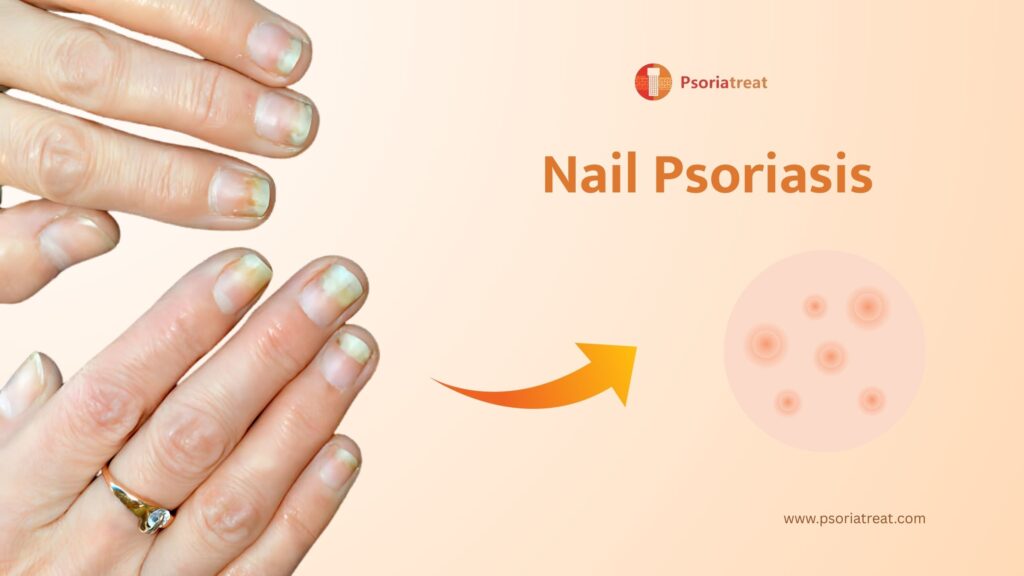
Common signs of nail psoriasis include:
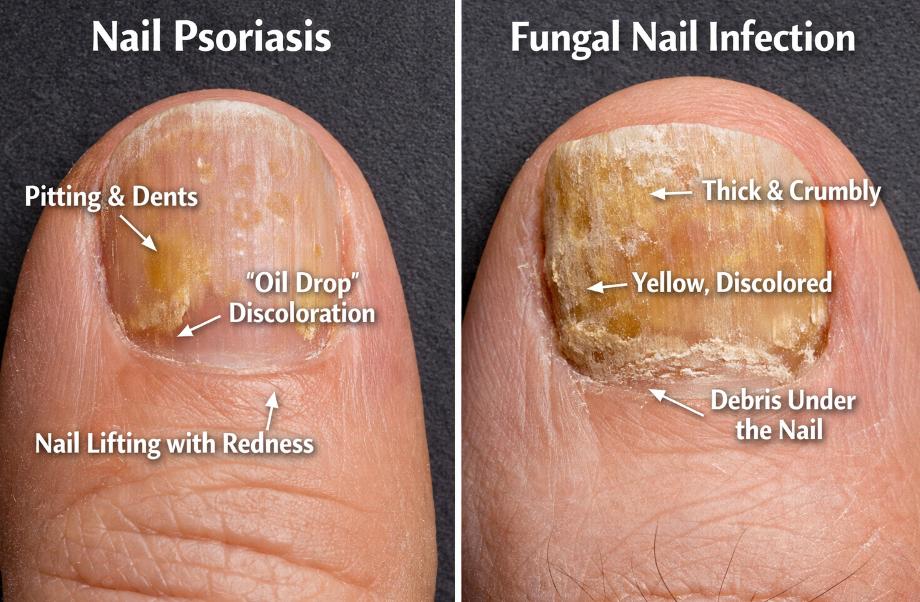
- Nail pitting: Small dents or holes on the nail surface.
- Discolouration: White, yellow or brown patches on the nail.
- Oil-drop spots: Yellowish or reddish patches that look like a drop of oil beneath the nail.
- Nail lifting: The nail starts separating from the skin underneath.
- Thickening: A build-up of material beneath the nail.
- Crumbly nails: Parts of the nail may become weak and break.
Nail psoriasis can affect everyday activities. Some people experience tenderness, pain or difficulty using their fingers.
2. What is a fungal nail infection?
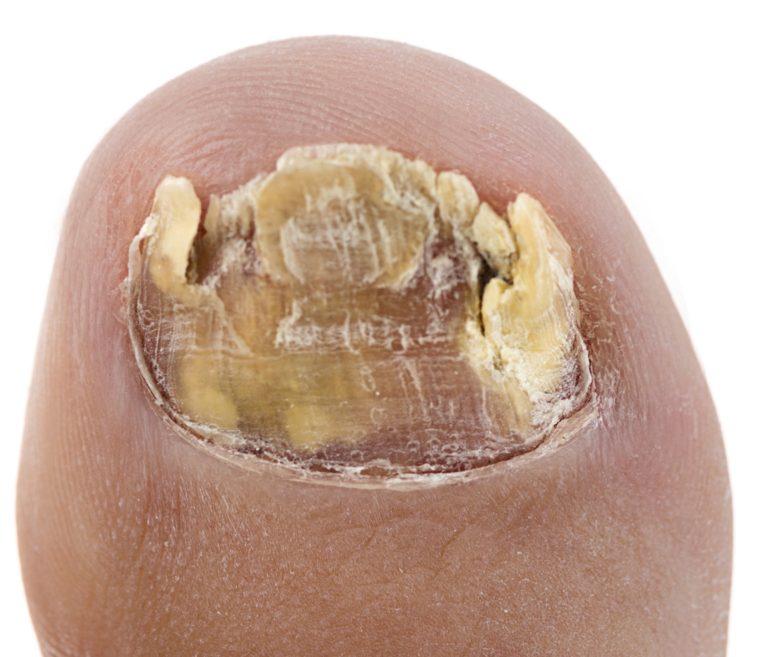
A fungal nail infection, medically known as onychomycosis, occurs when fungi infect the nail or the area beneath it.
It is more common in toenails, although fingernails can also be affected. The infection may develop slowly and become more noticeable over time.
Common signs include:
- Yellow, white, brown or sometimes greenish nail discolouration.
- Thickened nails.
- Nails that become brittle or crumbly.
- Debris collecting beneath the nail.
- Nail separation from the nail bed.
- Changes in nail shape.
- Sometimes an unpleasant smell.
Fungal nail infections can spread to other nails or nearby skin. For example, a person with an athlete’s foot may also develop a fungal infection in the toenails.
3. Nail psoriasis vs fungal nail infection: key differences
Although these conditions can look alike, some features may help a healthcare professional distinguish between them.
| Feature | Nail psoriasis | Fungal nail infection |
| Main cause | Immune-related inflammatory condition | Fungal infection |
| Common nail changes | Small pits, oil-drop spots, lifting and thickening | Yellowish discolouration, thickening and crumbly nail |
| Nail surface | May have tiny dents or an uneven surface | May become rough, brittle or powdery |
| Number of nails | Can affect several nails | May begin in one nail and spread |
| Common location | Fingernails and toenails | More common in toenails |
| Other clues | May occur with skin psoriasis or joint symptoms | May occur with athlete’s foot or fungal skin infection |
| Contagious? | No | Can spread through fungal infection |
These are general patterns, not rules. A fungal infection can affect several nails, and psoriasis can affect only one nail. Nail appearance alone cannot confirm the diagnosis.
4. Can nail psoriasis and nail fungus occur together?
Yes. A person can have nail psoriasis and a fungal nail infection at the same time.
Psoriasis can change the nail structure and cause lifting or damage. This may make it easier for a fungal infection to develop in an affected nail.
This is one reason why a nail problem should not automatically be labelled as psoriasis or fungus based only on its appearance.
If you have psoriasis and notice new nail discolouration, thickening or debris beneath the nail, ask a dermatologist whether fungal testing is needed.
5. How are these conditions diagnosed?
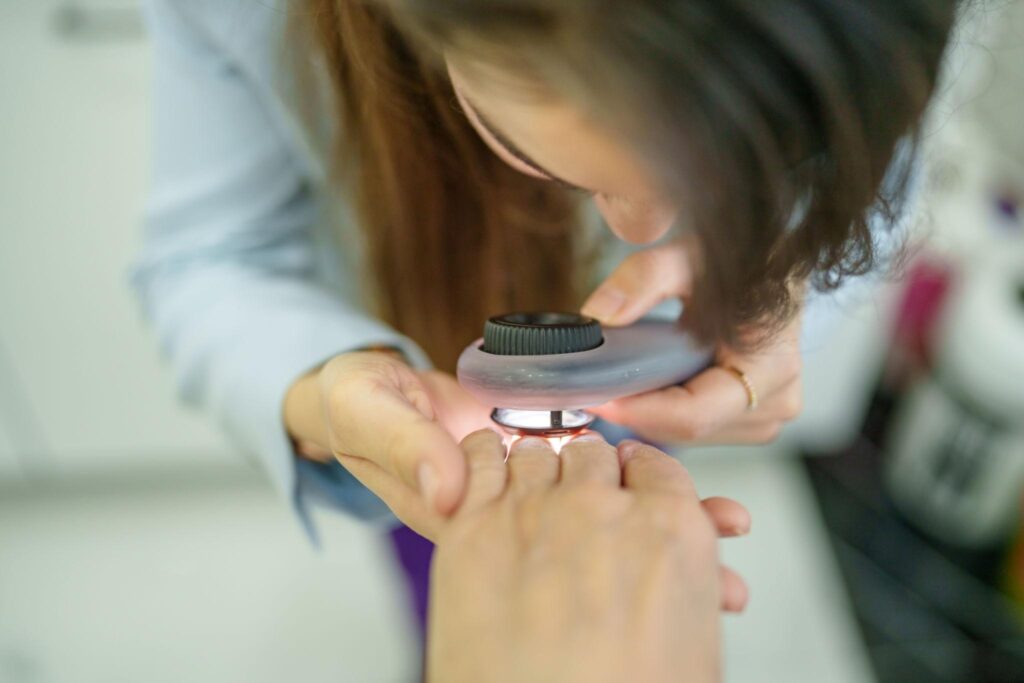
A dermatologist will examine your fingernails, toenails and surrounding skin. They may also ask about:
- Whether you have psoriasis on your skin or scalp.
- When the nail changes started.
- Whether one or several nails are affected.
- Itching, pain, swelling or skin changes around the toes.
- Previous nail injuries or treatments.
- Joint pain, swelling or morning stiffness.
Nail sample testing
If a fungal infection is suspected, the doctor may take a small nail clipping or scrape material from beneath the nail.
The sample may be examined under a microscope or sent for laboratory testing, such as fungal culture or other tests.
This is important because psoriasis, fungal infections and nail injuries can look alike. Confirming the cause helps avoid unnecessary or unsuitable treatment.
6. Treatment for nail psoriasis
Treatment depends on how many nails are affected, how severe the changes are and whether psoriasis is also affecting the skin or joints.
A dermatologist may recommend:
- Prescription creams or ointments applied to the affected nail area.
- Other local treatments, depending on the part of the nail affected.
- Injections around the nail in selected cases.
- Medicines that work throughout the body when nail psoriasis is severe or other areas are also affected.
Nail psoriasis can take time to improve because nails grow slowly. Fingernails usually grow faster than toenails, so visible improvement may take several months or longer.
Do not use strong prescription creams or other medicines on your own. A dermatologist should guide treatment.
7. Treatment for fungal nail infection
Treatment depends on the type of fungus, the number of nails involved and the severity of the infection.
Options may include:
- Antifungal nail solutions or lacquers for selected mild infections.
- Prescription oral antifungal medicines for some infections.
- Nail trimming or removal of damaged nail material as part of treatment in selected cases.
Oral antifungal medicines may have side effects and can interact with other medicines. A doctor may recommend tests or review your medical history before prescribing them.
Treatment often takes several months. Even after the fungus is controlled, the nail needs time to grow out.
8. How to care for nails at home
Whether you have nail psoriasis or a fungal infection, gentle nail care can help reduce damage.
Try these simple steps:
- Keep your nails clean and comfortably short.
- Avoid biting, picking or tearing your nails.
- Do not scrape beneath your nails with sharp objects.
- Wear comfortable footwear that does not press against your toenails.
- Keep your feet clean and dry, especially between the toes.
- Change socks regularly.
- Wear footwear in shared wet areas such as public showers and changing rooms.
- Wear gloves when your hands are exposed to water or cleaning products for long periods.
- Avoid aggressive manicures and pedicures.
Do not share nail clippers, files or other nail-care tools. Clean them properly after use.
9. When should you see a doctor?
Consult a dermatologist if:
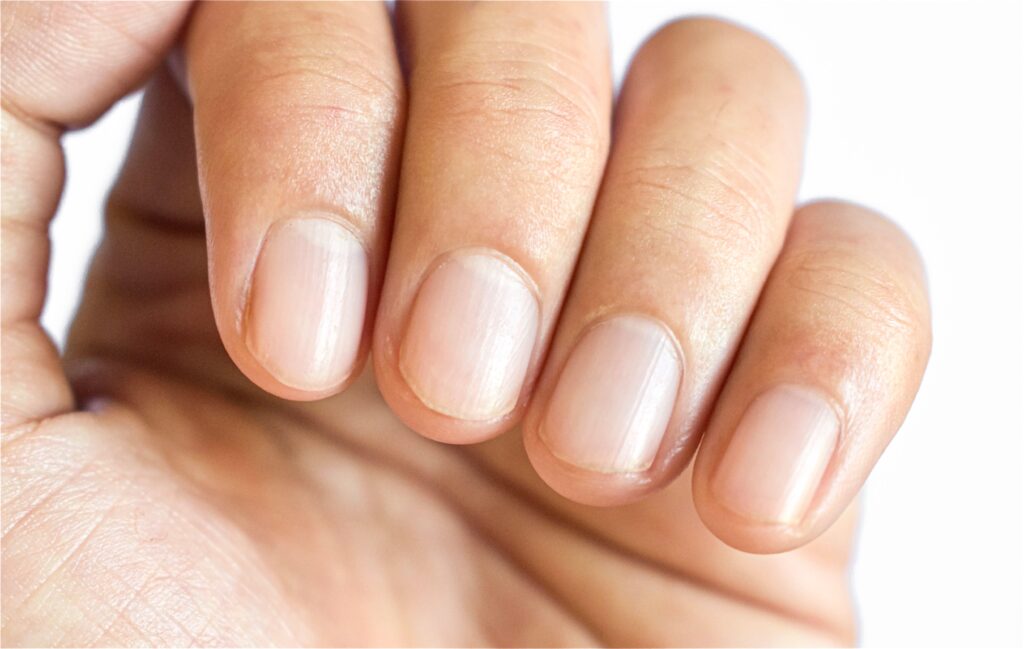
- Your nails become thick, discoloured or crumbly.
- You notice small pits or unusual patches on the nail.
- A nail starts lifting from the skin beneath it.
- The nail changes are getting worse.
- You have psoriasis and notice new nail symptoms.
- You have pain, swelling or redness around the nail.
- You also experience joint pain, swelling or stiffness, especially in the morning.
Joint symptoms deserve attention because nail psoriasis can be associated with psoriatic arthritis.
Seek prompt medical attention if you develop severe pain, spreading redness, pus, fever or a rapidly worsening infection around the nail. A new or unusual dark streak in a nail, especially if it changes or spreads, should also be examined.
Conclusion:
Nail psoriasis and fungal nail infection can cause similar changes, such as thickening, discolouration and nail lifting. However, they have different causes and need different treatments.
Small dents and oil-drop patches may suggest nail psoriasis, while yellowish, thick and crumbly nails may suggest a fungal infection. But these signs are not enough to make a diagnosis.
The safest approach is to have unusual or persistent nail changes examined by a dermatologist. If needed, a nail sample can help confirm whether a fungus is present. Remember that both conditions can occur together.
Early assessment and the right treatment can help protect nail health and reduce discomfort.
Noticing unusual changes in your fingernails or toenails? Contact Psoriatreat to learn about consultation options and discuss your psoriasis-related concerns with the care team – Book an Appointment
Frequently Asked Questions
1. How can I tell if I have nail psoriasis or a fungal infection?
Nail psoriasis may cause small pits, oil-drop patches, nail lifting and thickening. A fungal infection may cause yellowish discolouration, thickening and crumbly nails. However, the conditions can look alike, so a dermatologist may need to examine the nail and test a sample.
2. Can nail psoriasis look like nail fungus?
Yes. Both conditions can cause nail discolouration, thickening and separation from the nail bed. This is why an examination and, when needed, fungal testing are important.
3. Is nail psoriasis contagious?
No. Nail psoriasis is an immune-related condition and does not spread from one person to another. A fungal nail infection, however, can spread through contact with infected nails, skin or contaminated surfaces.
4. Can I have nail psoriasis and a fungal infection together?
Yes. Both conditions can affect the same nail. A dermatologist may recommend a nail sample test if a fungal infection is suspected.
5. Does nail psoriasis go away quickly?
Usually not. Nails grow slowly, so improvement can take several months or longer. Treatment and recovery time depend on the severity of the condition and the nails involved.
Written by –
This article is written by Dr. R. S. Sonawane.
M.D. (Homeopathy), DI (Homeopathy), London
Psoriasis Specialist Doctor in India
Dr. R. S. Sonawane is India’s first Homeopathic Psoriasis Specialist, with over 40 years of dedicated experience in treating psoriasis and related chronic skin conditions using a holistic, patient-focused approach. He holds advanced training in homeopathy and has helped tens of thousands of patients achieve long-term relief from psoriasis through personalized, immune-balancing treatment plans designed to address the root cause of the condition rather than just symptoms.
For more such tips and information from Dr. R. S. Sonawane, follow him on –
https://www.instagram.com/psoriatreat_india
https://www.linkedin.com/in/psoriatreat
Calculate your Psoriasis Severity Score – Psoriasis Severity Calculator
[Disclaimer – The images used in this article are for educational and reference purposes only. They are not original patient photographs from Psoriatreat and should not be used for self-diagnosis. Skin conditions can look different from person to person, and a healthcare professional should assess persistent or unusual skin changes.]