
Introduction:
Why Does Skin Stay Dark or Light After Psoriasis Clears? – You may have noticed this after a psoriasis flare: the itching has settled, the scaling is gone, and the patch that troubled you for so many weeks finally looks calm. But there is still one thing that doesn’t look right.
The skin is darker than it was before. Or perhaps it has gone the other way and looks lighter than the surrounding skin. This can be confusing. If the psoriasis has cleared, why hasn’t the skin returned to its usual colour? And does that darker or lighter patch mean the psoriasis is coming back? In many cases, it doesn’t.
Psoriasis can settle before the colour of the skin returns to normal. The inflammation may be gone, but the skin can take much longer to recover its usual pigmentation. Dermatologists often describe these changes as post-inflammatory hyperpigmentation, hypopigmentation, or simply dyspigmentation. They are especially noticeable in people with medium to dark skin tones.
The psoriasis may be gone even though the mark remains
This is the most important thing to understand. When psoriasis is active, the skin becomes inflamed. After the inflammation settles, the affected area does not always look exactly like the surrounding skin straight away. The colour may remain darker, lighter, or slightly different for some time.
Think about what happens after a mosquito bite or an injury. The original problem disappears, but a mark can remain for a while. The skin needs time to repair itself.
Something similar can happen after psoriasis. So, if you look at an old psoriasis patch and see a flat brown mark where the scales used to be, it does not automatically mean that the psoriasis is still active. The same is true when the area looks lighter than the surrounding skin. The appearance of the skin is changing, but the underlying process is not necessarily the same as an active psoriasis flare.

Why does psoriasis sometimes leave dark skin behind?
The darker mark is often related to increased pigmentation following inflammation. The medical term commonly used for this is post-inflammatory hyperpigmentation.
Inflammation can affect melanocytes, the cells involved in producing melanin, which gives the skin its colour. When the skin responds to inflammation, pigment can become more noticeable in the area that was previously affected.
This is one reason dark marks can remain after a psoriasis patch has cleared.
People with darker skin are more likely to notice this change because even a relatively small difference in pigmentation can stand out against the surrounding skin. Often patients notice that psoriasis can leave darker or lighter patches after clearing, and these changes are not considered scars.
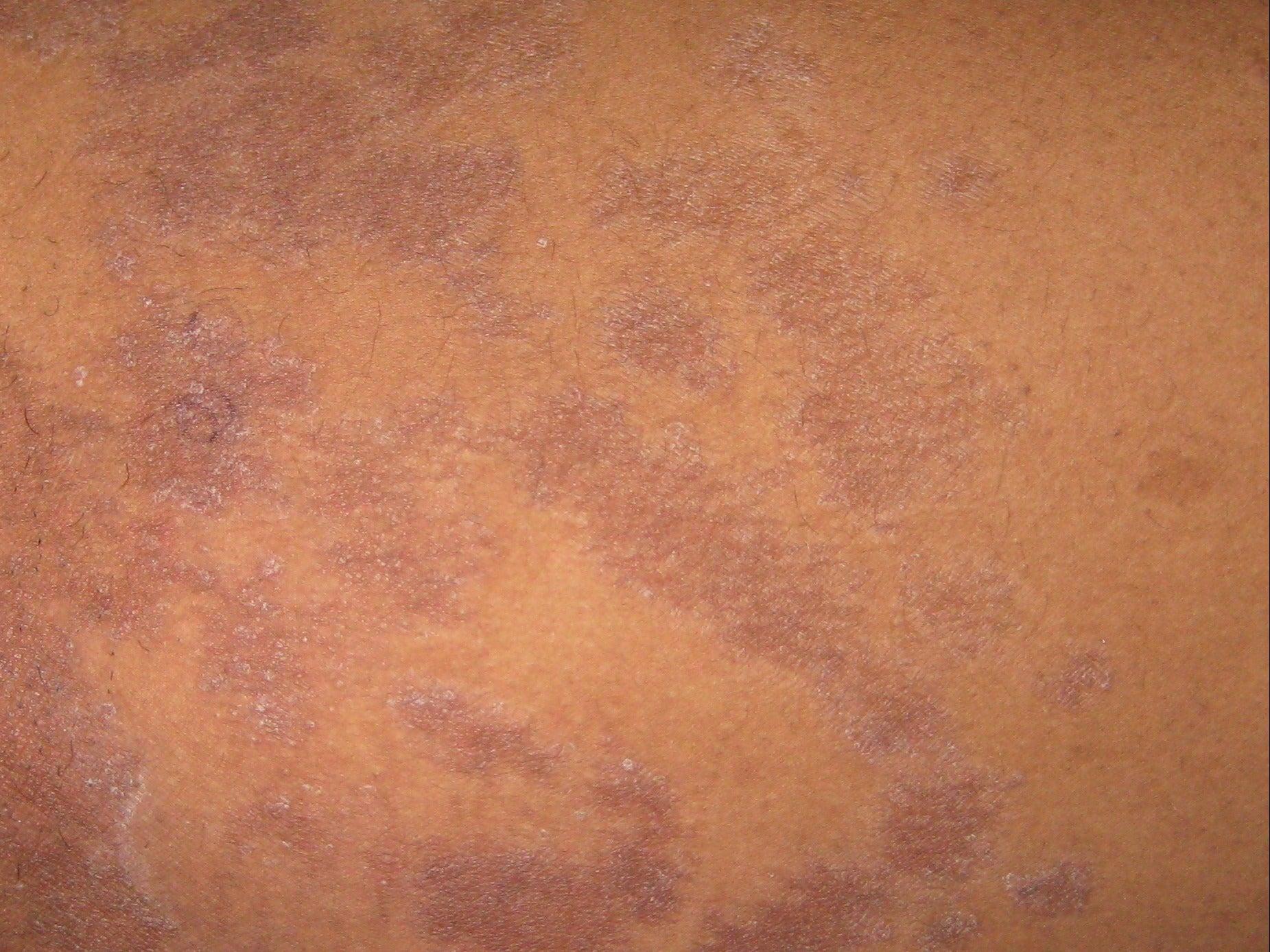
Why does the skin sometimes become lighter?
Not every person develops a dark mark. Some people notice the opposite. The skin that previously had psoriasis may look pale or lighter than the surrounding area. This is called post-inflammatory hypopigmentation.
Inflammation can temporarily affect the normal function of pigment-producing cells. As a result, the affected skin may contain less visible pigment than the surrounding skin. There is also a well-described phenomenon in psoriasis in which a lighter ring can appear around a healing lesion. The important point is that a lighter patch after psoriasis is not automatically a sign of permanent skin damage.
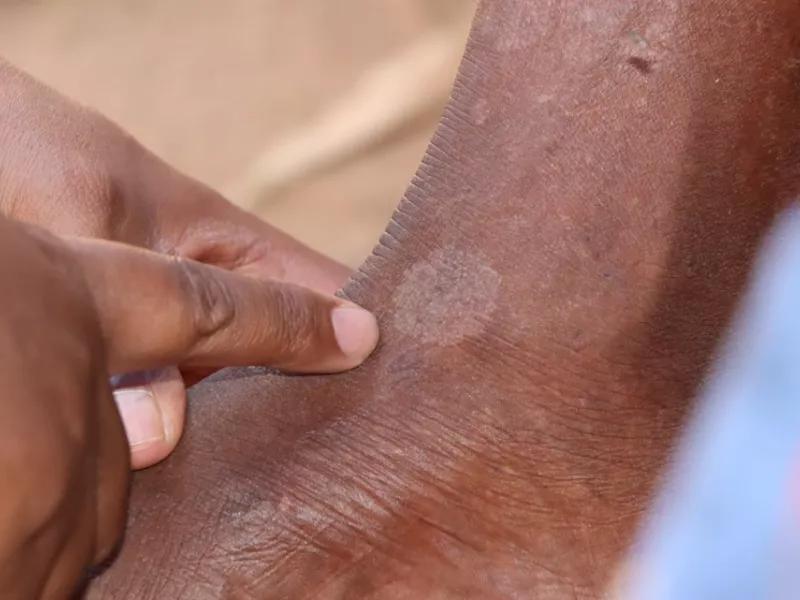
Why does this seem more obvious on brown or darker skin?
For someone with fair skin, a small change in pigmentation may not be very noticeable. On brown or darker skin, the difference can be much easier to see.
This is one reason people with skin of colour may feel that their psoriasis has not really gone away, even when the active inflammation has settled.
There is another issue too. Psoriasis itself can look different on darker skin. Instead of the bright red patches commonly shown in photographs of psoriasis on lighter skin, it may appear violet, dark brown or otherwise less obviously red. That means the colour left behind after the flare can also look different.
Research into psoriasis and post-inflammatory pigmentation has found that these colour changes can be more pronounced in people with skin of colour and may take considerable time to settle.
Is the dark or light patch a scar?
Usually, no. A scar is a structural change in the skin. A pigmentation change is mainly a change in colour. That difference matters because people often see a brown or pale patch and immediately worry that their skin has been permanently damaged.
A pigmentation change after psoriasis can be quite noticeable without being a scar.
That does not mean every unusual mark should automatically be blamed on previous psoriasis. If a patch continues to change, spreads, becomes painful or develops new symptoms, it should be assessed. But a flat change in colour after a psoriasis patch has cleared can simply be part of the recovery process.
How long does it take for the colour to return?
You may expect the skin to look normal as soon as the psoriasis disappears. In reality, the colour can take much longer to settle.
Some people notice gradual improvement over a few months. For others, the difference remains visible for much longer. Guidance for people with skin of colour notes that lighter or darker patches left after psoriasis may take around three to twelve months or longer to disappear. Recent research also reports that pigmentation changes can sometimes persist for months or even years. There is no single timetable because everyone’s skin responds differently.
The original inflammation, your natural skin tone, the location of the psoriasis, the treatment used and other individual factors can all play a role. So, a mark that is still visible after several weeks does not necessarily mean that the skin has stopped healing.
What if the skin becomes darker during treatment?
Imagine that your psoriasis is finally improving, but the skin underneath now looks darker. It is easy to assume that the treatment has caused a problem. Sometimes the timing is simply misleading. As the psoriasis clears, the pigmentation left behind can become more obvious.
Treatment can also play a role in some situations. For example, phototherapy can darken treated skin. Some topical medicines can also have side effects when they are used incorrectly or for longer than prescribed.
That is why it is better not to stop or change a psoriasis treatment simply because you notice a colour change. If you are concerned, discuss it with the healthcare professional who prescribed the treatment.
How can you tell the difference between a mark and active psoriasis?
This is not always easy to judge at home, but there are a few things worth noticing.
Suppose the old patch is now completely flat. There is no scaling, the itching has stopped and the only difference is that the area is darker or lighter. That can fit with a post-inflammatory colour change.
Now imagine that the same area becomes raised again. It starts producing scale, becomes increasingly itchy or looks inflamed. That is a different situation and may suggest that psoriasis is active again.
The colour alone does not tell the whole story. If you are unsure, getting the area examined is safer than repeatedly treating it based on how it looks in a photograph or mirror.
Can scratching make the pigmentation worse?
It can certainly keep the skin irritated. Anyone who has experienced psoriasis knows how difficult itching can be. Even after a patch has started improving, the habit of scratching can continue.
Repeated rubbing or scratching can cause more irritation and inflammation. That may make it harder for the skin to settle and can contribute to further colour changes.
This is one reason it is worth paying attention to persistent itching, even when the psoriasis appears much better. If you are still scratching the area regularly, don’t simply assume that you have to live with it. The reason for the itching should be considered.
Should you try to remove the dark patch yourself?
It is understandable to want the mark gone quickly, especially if it is on your face, neck, hands or another visible part of the body. But aggressive treatment is not always the answer.
Scrubbing the skin, using harsh acids or applying unprescribed bleaching products can irritate the area. Irritation can trigger more inflammation, and more inflammation can sometimes lead to more pigmentation.
The first step is to understand what caused the colour change. If it follows a psoriasis flare and the psoriasis itself is now controlled, the pigmentation may gradually improve on its own. If it is persistent or particularly bothersome, a healthcare professional can assess it and discuss whether treatment is appropriate. The treatment of pigmentation depends on its cause, and evidence for different treatment options varies.
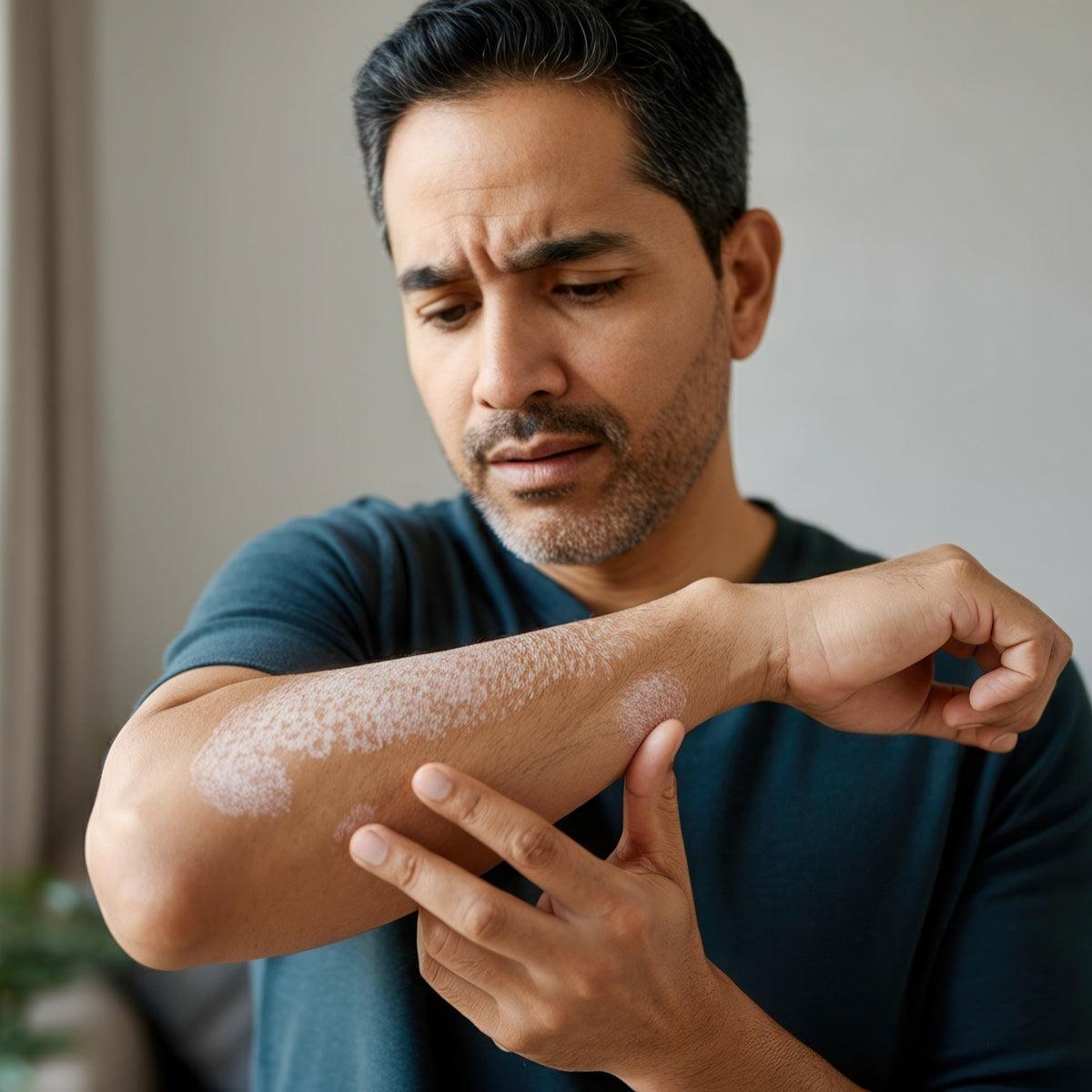
What can you do while waiting for the skin to recover?
There is no need to make your skin-care routine complicated. Be gentle with the affected area. Avoid unnecessary scratching and products that cause burning or irritation. Moisturising can help support the skin barrier, particularly if the skin is dry.
Sun protection can also be useful, especially when dealing with dark marks. Sun exposure can make some forms of pigmentation more noticeable, and current reviews consider photoprotection an important part of managing post-inflammatory pigmentation.
Most importantly, keep paying attention to the psoriasis itself. If new plaques continue to appear, or if old areas become scaly and inflamed again, the underlying psoriasis needs attention. Treating the active inflammation is more important than simply trying to make the leftover colour disappear.
What about psoriasis marks on Indian skin?
This is a question many Indian patients have because pigmentation can be quite noticeable on brown skin.
A psoriasis patch may look different on Indian skin compared with photographs showing psoriasis on very fair skin. It may appear darker, violet or less obviously red. Once the inflammation settles, the area can also remain darker or lighter than the surrounding skin.
That difference can be frustrating. You may have spent months trying to get the psoriasis under control, only to find that the skin still does not look completely normal. But the remaining colour change does not necessarily mean that the treatment has failed. Sometimes the inflammation settles first and pigmentation takes longer to catch up.
Conclusion:
Dark or light skin after psoriasis can be surprising, but it is not unusual. In many people, the change is related to pigmentation left behind by the inflammation.
The darker form is often called post-inflammatory hyperpigmentation. A lighter area may be described as post-inflammatory hypopigmentation. Both can occur after psoriasis has improved, and both can be more noticeable on darker skin.
The important thing is to look at the whole picture rather than colour alone.
If the skin is flat and the scaling and inflammation have disappeared, the remaining mark may simply be part of the healing process. If the area becomes raised, scaly, painful or increasingly itchy again, it is worth having it assessed.
Your psoriasis may have cleared before your skin has completely returned to its old appearance. Sometimes, the skin just needs more time.
Concerned about a dark or light patch after psoriasis?
A change in skin colour does not always mean that psoriasis has returned. But if you are unsure about what you are seeing, getting the area assessed can give you a clearer understanding of your skin condition. Talk to the Psoriatreat team for guidance about your psoriasis and related skin changes – Book an appointment
Frequently Asked Questions
1. Why does skin stay dark after psoriasis clears?
Skin can remain darker after psoriasis because the inflammation may affect the skin’s pigment. This can lead to post-inflammatory hyperpigmentation. The psoriasis may have already settled even though the darker colour remains for some time.
2. Why does skin become lighter after psoriasis?
Psoriasis-related inflammation can sometimes affect the cells responsible for producing skin pigment. As a result, the area where psoriasis was present may look lighter than the surrounding skin. This is known as post-inflammatory hypopigmentation.
3. Are dark or light marks after psoriasis permanent?
Not necessarily. Many pigmentation changes gradually become less noticeable as the skin recovers. However, the process can take several months, and in some people it may take longer.
4. How can I tell if the psoriasis has returned or if it is just a colour change?
If the area is flat and only looks darker or lighter, it may be a leftover pigmentation change. If it becomes raised, scaly, inflamed or increasingly itchy again, it may indicate active psoriasis. If you are unsure, it is better to have the area examined by a healthcare professional.
5. Should I use a cream to remove dark marks after psoriasis?
Avoid using strong bleaching creams, harsh scrubs or other irritating products without professional advice. Irritation can sometimes make pigmentation more noticeable. It is better to first understand the reason for the colour change and then discuss suitable options with a healthcare professional.
Written by –
This article is written by Dr. R. S. Sonawane.
M.D. (Homeopathy), DI (Homeopathy), London
Psoriasis Specialist Doctor in India
Dr. R. S. Sonawane is India’s first Homeopathic Psoriasis Specialist, with over 40 years of dedicated experience in treating psoriasis and related chronic skin conditions using a holistic, patient-focused approach. He holds advanced training in homeopathy and has helped tens of thousands of patients achieve long-term relief from psoriasis through personalized, immune-balancing treatment plans designed to address the root cause of the condition rather than just symptoms.
For more such tips and information from Dr. R. S. Sonawane, follow him on –